
Most owners can name something they want to change.
Work fewer hours. Delegate more. Increase prices. Hold the team more accountable. Stop taking on the wrong customers. Build a leadership team. Spend more time on strategy.
The difficulty is rarely recognising the issue. The difficulty is sustaining action once the urgent work returns.
This is where Motivation, the second stage of The 6M’s of Business Growth methodology, becomes important.
Motivation is more than enthusiasm
Enthusiasm can disappear quickly. Motivation is the reason the change matters enough to continue even when it is inconvenient.
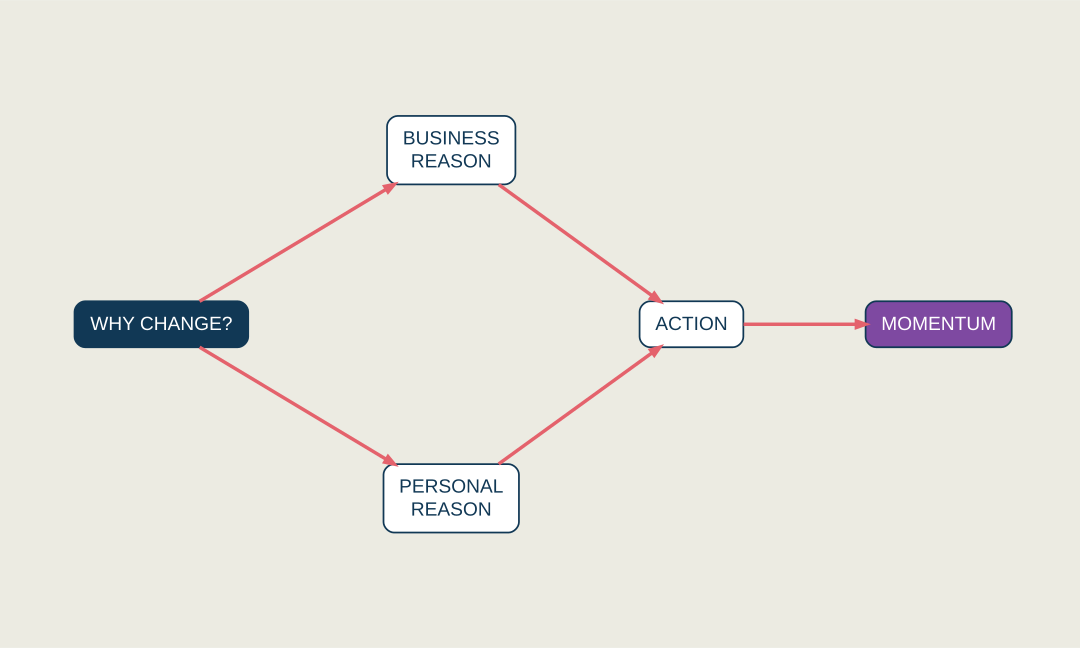
For a business owner, there are often two layers:
- business motivation: profit, growth, resilience, value, capability or customer outcomes;
- personal motivation: freedom, family, security, energy, purpose, confidence or choice.
The strongest changes often connect the two.
Ask why the change matters now
Consider an owner who wants to delegate more.
The surface reason might be “I need more time.” Go one level deeper. What would that time be used for? Strategic thinking? Family? New product development? Recovery from years of constant pressure?
Then ask what happens if nothing changes.
Will the owner still be approving the same decisions in three years? Will the team stop developing? Will the business become harder to sell? Will the owner still enjoy running it?
Motivation often becomes clearer when both the opportunity and the cost of inaction are visible.
Whose goal is it?
Business owners are surrounded by other people’s definitions of success.
Grow faster. Hire more people. Reach a revenue milestone. Sell the business. Work four days a week. Build recurring revenue.
Any of those may be appropriate, but a goal borrowed from somebody else rarely creates durable motivation.
A useful coaching question is: If nobody else knew whether you achieved this, would you still want it?
Make the desired outcome specific
“I want more freedom” can be meaningful but difficult to act on.
What would freedom look like in practice? One day each week with no operational involvement? Four uninterrupted weeks away each year? No customer issue escalating directly to you? More choice over which work you personally do?
The more clearly the desired outcome is understood, the easier it becomes to evaluate whether the change is moving in the right direction.
Motivation has to survive discomfort
Meaningful business change often feels worse before it feels better.
Delegation can initially take longer than doing the task yourself. A price increase can create nervousness. Holding somebody accountable can lead to a difficult conversation. Installing a new process can temporarily slow the team down.
If the reason for change is weak, this discomfort becomes an excuse to retreat.
If the reason is clear, discomfort can be recognised as part of the transition rather than proof that the change was wrong.
Connect Motivation to Modification
Within The 6M’s of Business Growth methodology, Motivation is followed by Modification.
The question moves from “Why does this matter?” to “What will I actually do differently?”
A strong reason without action becomes frustration. Action without a strong reason often becomes short lived.
The two need each other.
Questions for your next change
- What specifically do I want to change?
- Why does it matter to the business?
- Why does it matter to me personally?
- What will happen if I do nothing for another year?
- What discomfort am I likely to encounter?
- What would make continuing worthwhile when that discomfort appears?
- How will I know the change is producing the outcome I wanted?
Motivation is allowed to evolve
The reason that drove you to start a business may not be the reason that drives you now.
That is not a problem. Businesses mature and owners mature with them.
Reviewing your motivation can help ensure that you are still building something aligned with what matters today rather than chasing a destination chosen years ago.
If you know something needs to change but keep being pulled back into the same patterns, executive coaching or business mentoring can help you explore what is driving the change and what is getting in the way. Book your 30-minute Clarity Session.